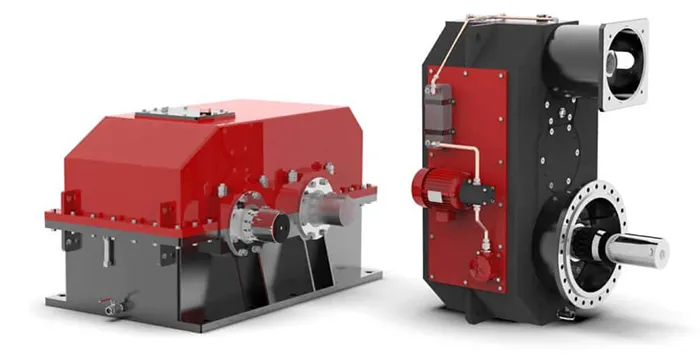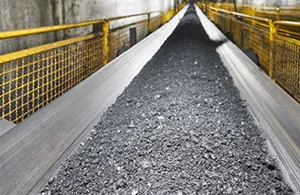
The modular design offers flexible installation, horizontal, vertical, or upright, and flange-mounted models fit easily into compact spaces. A non-contact labyrinth sealing system minimizes wear and ensures long-term reliability. Improved cooling fan housing improves heat dissipation and keeps performance stable during continuous operation.
- Power capacity
up to 5230 HP (3900 kW) - Output shaft diameter
20 mm – 360 mm - Maximum torque
up to 551,600 N•m - Gear ratio range
6.3:1 – 500:1
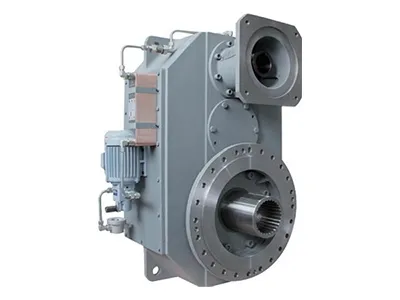
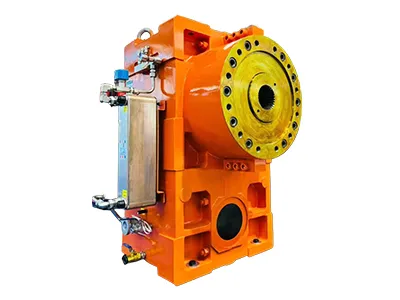
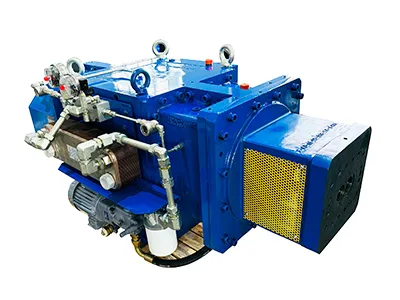
Cycloidal speed reducers combine a compact design with smooth motion and reliable performance. They’re built to handle continuous operation while keeping efficiency and stability over time. Their housing is made of high-quality cast iron (FC25), while larger models above size 620 use ductile cast iron (FCD45) for extra strength.
- Power
up to 200 HP (150 kW) - Gear ratio range
6:1 to 658,503:1 - Output shaft diameter
5 mm to 180 mm (solid shaft) - Torque
up to 58,800 N•m
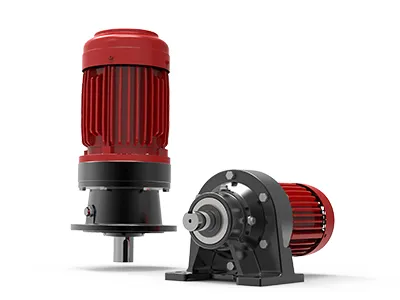
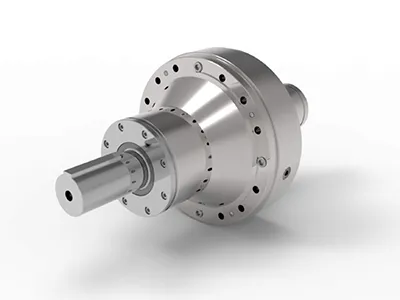
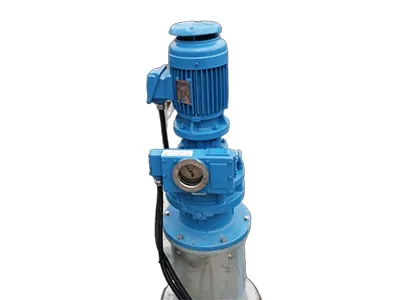
Planetary speed reducers are known for their compact design and exceptional power density. By distributing the load evenly across multiple gears, they deliver stable torque, smooth motion, and high transmission efficiency. Their versatility makes them suitable for demanding applications that require precision, durability, and continuous performance.
- Rated torque
39000Nm - Oil capacity
18 L - Maximum output torque
50000Nm - Gear ratio
126.43
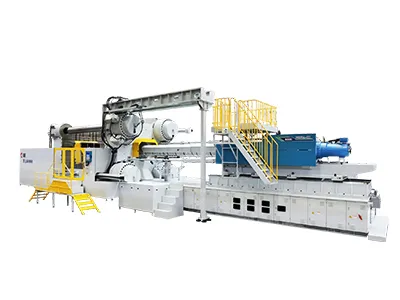
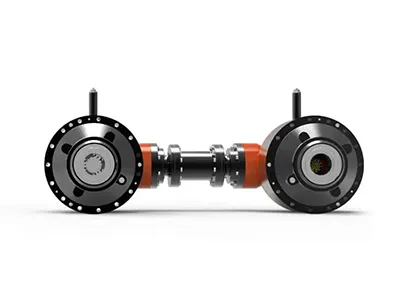
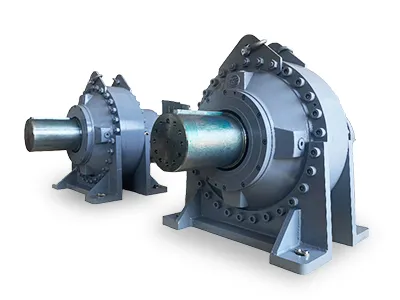
| 0NM | 1000NM | 5000NM | 10000NM | 100000NM | 300000NM | 500000NM | 1000000NM | |
| Industrial Gearbox – TSS Series | 2600 ~ 552000NM | |||||||
| Gearbox for Injection Moulding Machines – TIN Series | 2000~140000NM | |||||||
| Gearbox for Injection Moulding Machines – KIN Series | 1200~69000NM | |||||||
| Gearbox for Single-Screw Extruders – TEX Series | 1400~300000NM | |||||||
| Gearbox for Parallel Twin-Screw Extruders | 1800~5100NM | |||||||
| Gearbox for Conical Twin-Screw Extruders | 1800~6000NM | |||||||
| Planetary Speed Reducer – TP Series | 1000~450000NM | |||||||
| Low-Backlash Planetary Speed Reducer | 200~8500NM | |||||||
| Planetary Speed Reducer for Concrete Mixers | 12500~150000NM | |||||||
| Cycloidal Speed Reducer – CYKO Series | 10~60000NM | |||||||
| Helical Gear Reducer – TK Series | 50~55000NM | |||||||
| Helical Bevel Gear Reducer – TR Series | 50~18009NM | |||||||